
Hokema has been crafting high-quality, handmade kalimbas in Germany since 1985. Their models vary in size, number of tines, resonance, and tuning. Here is a practical Q&A guide to help you find the right one.
Hokema kalimbas are handmade in Germany with high-quality, sustainably sourced materials and meticulous attention to detail. Their warm, clear tone — produced by a wooden body and precise tuning — makes them well suited to intuitive play, meditation, sound healing, and musical exploration. Unlike mass-produced instruments, each Hokema is crafted to last and to sound exceptional.
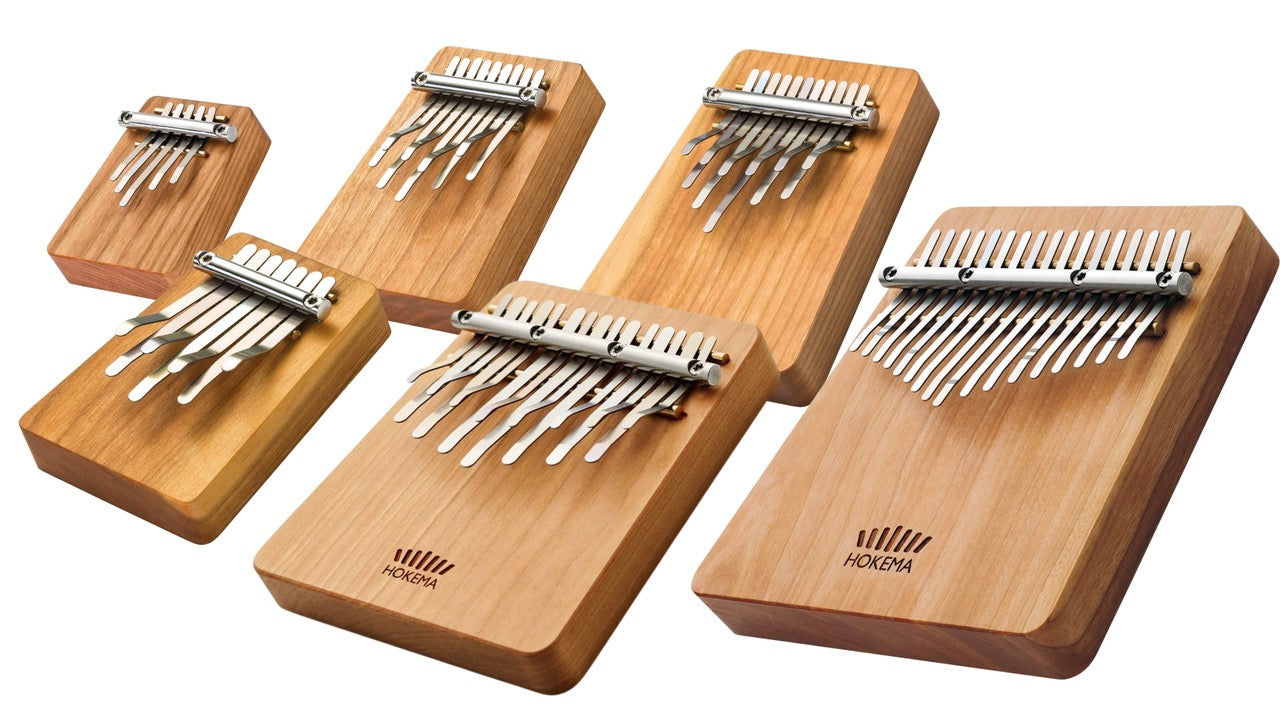
The number in each model name indicates the total number of tines on the instrument. More tines means a wider melodic range and the ability to play more songs — but it also means that not all notes will harmonize when played together. Our B5, B7, B9, B11, and B15 are designed for intuitive improvisation: all their notes blend harmoniously, so there are no “wrong” notes. The B17 series is a full keyboard kalimba with a complete diatonic scale — ideal for playing songs and structured music, but it requires more practice to play fluently.
The B9 is the most popular choice for beginners. Tuned to A-minor, all its notes harmonize naturally — so you can start playing right away with no prior musical experience. The B7 is also beginner-friendly, with wider tines that feel easier under the thumb, especially for those with larger fingers. Its pentatonic C-major tuning produces vibrations felt strongly in the hands, making it a favorite among music therapists.
The B5 is the most compact and simple option — tuned to F-minor (also available in A-minor, D-minor, C-major, and G-major for the Intuitive Soundscapes Collections). Its high-pitched tones twinkle beautifully over the deeper sounds of other instruments and it is very easy for small hands to play.
The B9 is just as easy to play as the B5 but larger, with more tonal variety — a great next step for children who want more range while still having no wrong notes.
The B7 has wider tines but requires a bit more finger pressure to press down, which can be slightly harder for very young children.
The B9 Kid is tuned to C-major and allows children to play simple, recognizable songs — but unlike the fully intuitive models, it does require some practice and basic instruction to get the most out of it.
The Sansula Renaissance is also a great choice for children of all ages, with its durable moisture-resistant Remo drum head and resonant, forgiving sound.
The B7, B9, and Sansula models are the top choices for sound healing. The B7 and B9 allow intuitive, harmonious play with no wrong notes. The Sansula adds a resonant, spacious quality through its drum head design — gentle movement against the body or a surface creates a flowing wah-wah effect that deepens immersion, especially in group settings. The Twin Kalimba is ideal for partner or therapeutic work, allowing two players to feel the vibration simultaneously.
Yes — kalimbas pair beautifully with monochords, singing bowls, and other drone instruments. While drones guide participants into deep relaxation, a kalimba adds gentle melodic orientation that prevents participants from drifting into sleep and supports their return from inner journeys. Choose a kalimba tuned to match the other instruments in your practice for the most cohesive sound.
The B11 (11 tines, G-major), B15 (15 tines, G-major), and B17 (17 tines, C-major) offer progressively wider melodic ranges. The B17 gives you the most flexibility for playing familiar songs, chord progressions, and original compositions. It includes 18 chord magnets in three colors. The B17 Mini has the same range in a smaller body — ideal for smaller hands, with tines mounted more closely together for easy glissandos.
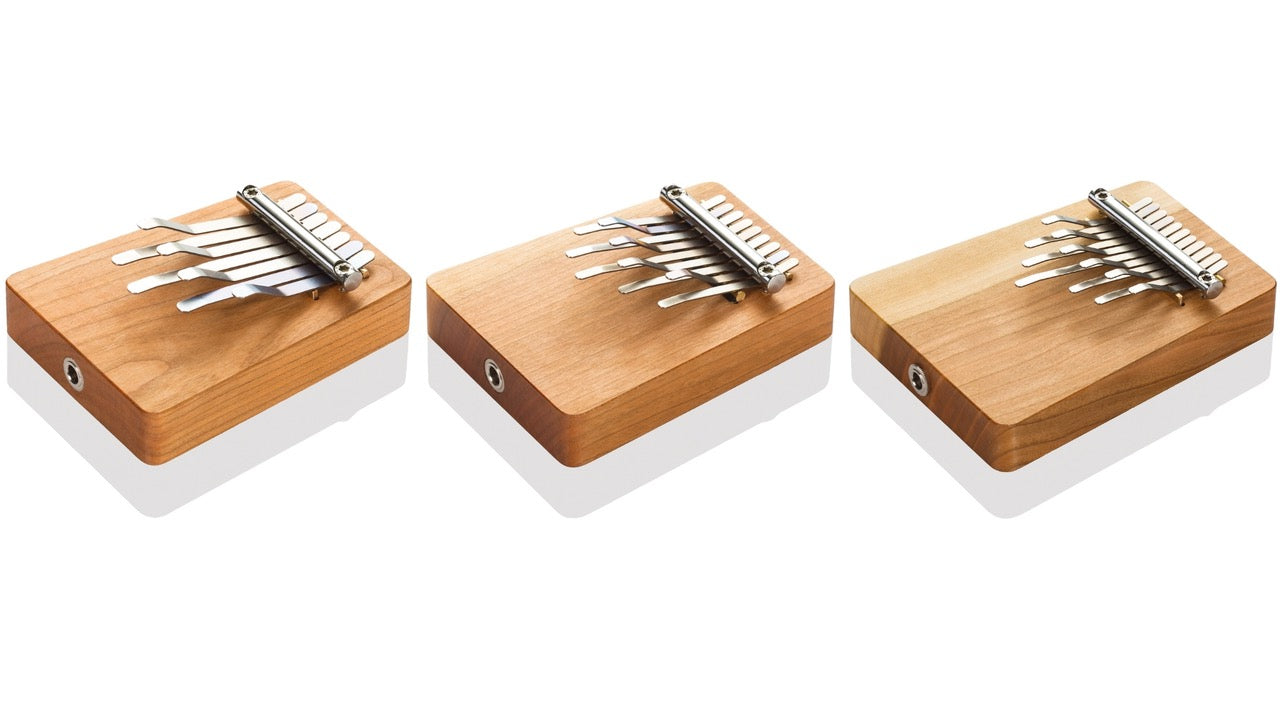
The Kalimba Elektro (available in B7, B9, and B11) is equipped with a built-in piezo pickup and a 6.35mm (1/4") jack socket, allowing direct connection to amplifiers or recording equipment — no microphone needed. It is the ideal choice for music producers, studio sessions, live looping, and stage performance.
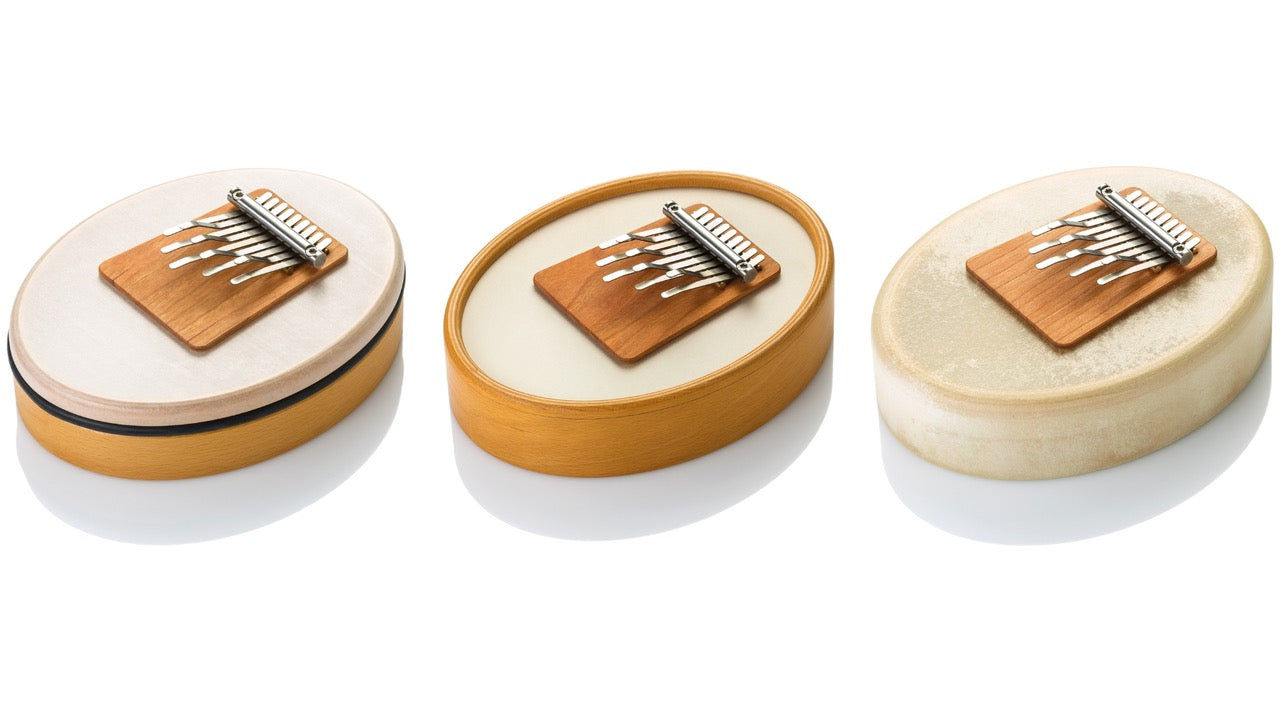
Invented by Peter Hokema in 2001, the Sansula is an oval wooden frame covered with a drum skin, with a small 9-tine kalimba suspended freely in the center. This design amplifies the tone into a spacious, echo-like resonance. Gentle movement against the body or a surface creates a wah-wah effect. All Sansulas are tuned to A-minor by default and are also available in D-minor, C-major, and G-major for the Intuitive Soundscapes Collections. Three versions are available:
Pentatonic and minor tunings (such as A-minor) create universally harmonious combinations that are easy to improvise on — ideal for intuitive play and sound healing. Scales with more notes (B15, B17) let you play a wider repertoire of melodies and familiar songs. Many Hokema kalimbas can be retuned using a tuning hammer and tuner. For a guided introduction to scale options, watch our kalimba tunings tour video and tuning guide.