
If you have always wanted to play music but never learned, you are not too late and you do not need talent. You need the right instrument. The easiest instruments to learn share three things: they are tuned so the notes sound good together, they need no special technique to make a sound, and you can play them without reading music.
Everyone can play an instrument
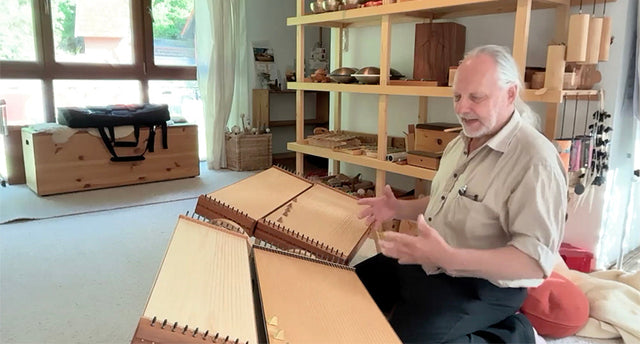
Have you ever felt like you can’t play an instrument because you’re not a musician? That question is how We Play Well Together began. Our founder, Gabriele Schwibach, sat down with Kalani Das of World Drum Club to talk about it.
Here are four intuitive instruments that adults with no music experience pick up quickly, starting with the simplest.
1. Chimes: the easiest of all

A Koshi or Zaphir chime has one technique: hold the cord and sway it. The rods inside are tuned to one chord, so every movement makes a full, gentle sound. There is nothing to learn before you start, which makes a chime a good first instrument and a calm way into sound.
Try it right now: play the four Koshi Earth Symphony chimes in our online chime player. Layer them, fade them in and out, and make your own little concert.
See the Koshi Earth Symphony chimes
2. Kalimba: a melody in your hands

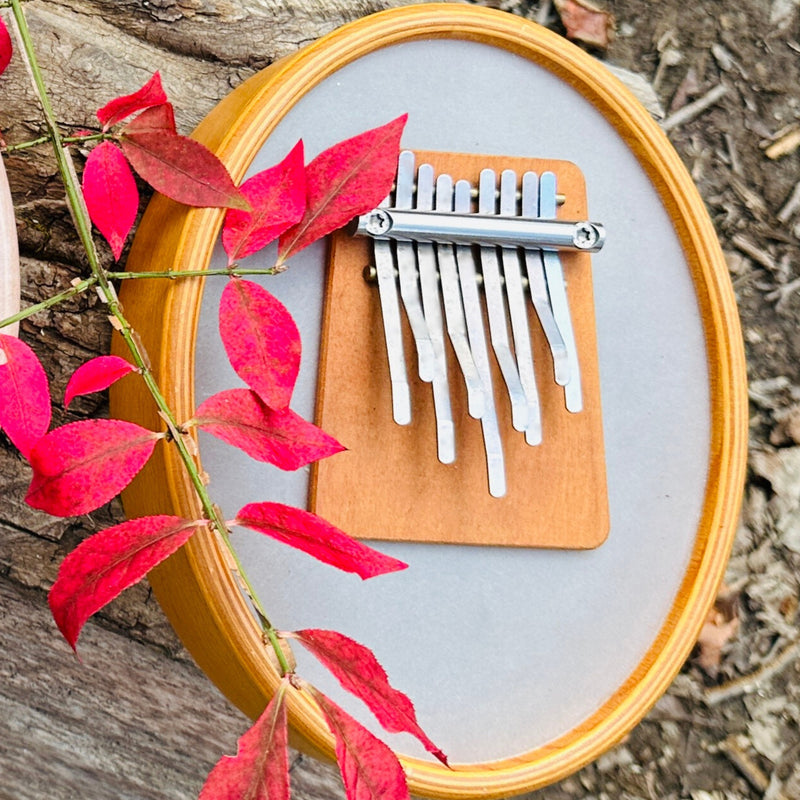
A kalimba is a small wooden instrument with metal tines that you pluck with your thumbs. If you can text, you can play one. Hokema kalimbas are tuned so there are no wrong notes: whatever you pluck fits together. The pocket-size B5 has five notes and is the gentlest start; the B17 has seventeen for when you want full melodies. The Sansula Renaissance is a kalimba mounted on a drum head, which gives the same easy notes a longer, fuller ring.
See Hokema kalimbas and Sansulas or join the free Kalimba Campfire meetup to play along with others.
3. Tongue drum: rhythm and melody together

A wooden tongue drum has a row of tuned tongues that you play with mallets or your fingers. Each tongue is one note, and there is nothing to press or hold down. Alternate two tongues in a slow pulse and you are already playing. It is the easiest way to learn rhythm on an instrument that also sings.
See feeltone wooden tongue drums
In metal: the Kigonki binaural gong drum

The Kigonki is a tongue drum made of steel, and it is just as easy to play. Its eight tongues are tuned to one scale, so there are no wrong notes: strike any of them with your hands or the mallets and it fits. What sets it apart is the sound. Eight matching tongues on the back answer the ones you play, giving a long, shimmering sustain with a gentle pulse, closer to a gong than a drum.
See the Kigonki binaural gong drum
4. Monochord: one strum, a wash of sound

A monochord has many strings, all tuned to work as one harmony. You stroke across them with your fingers and the instrument does the rest, filling the room with layered overtones. There are no chords to learn and no notes to find. It is a favorite of sound bath and sound healing practitioners, many of whom started with no music background.
See feeltone monochords or read the monochord buying guide. Thinking of leading sound baths yourself? Read How to Become a Sound Bath Practitioner.
How to choose your first instrument
- You want something small and affordable: start with a chime or a pocket kalimba.
- You want to play tunes: choose a kalimba.
- You are drawn to rhythm: choose a tongue drum, in wood for a warm tone or the metal Kigonki for a long, gong-like ring.
- You want to lead sound baths or play for others: choose a monochord.
Need inspiration first? Join one of our free meetups on Zoom, the Kalimba Campfire or Monochord Monday, and watch and learn from other players as they show how they use their instruments.

Already have an instrument? Find one that matches

Two instruments sound good together when they share a tuning. That is the idea behind our Intuitive Soundscapes Collections: monochords, kalimbas, chimes and tongue drums grouped by tuning and color coded, so you can see at a glance what fits what you already own. Pick the color of your tuning, for example green for C-Major, and every instrument in that group will blend with yours, with no wrong notes between them.
See the Intuitive Soundscapes Collections
Learn rhythm for free, with no experience
Whatever you choose, rhythm is the skill that makes it feel like music. Teacher Brandon Blake's free Wellness Percussion videos teach simple rhythm to non-musicians, starting with your hands and moving on to kalimbas, chimes, tongue drums and monochords.
Watch the free Wellness Percussion videos
Not sure which instrument or tuning fits you? Contact us for free advice before you buy.