









By: Joule L'Adara, MFA, Feeltone Trainer & Sound Facilitator
Koshi and Zaphir hanging hand chimes are made in France and have become absolute essentials for any sound therapy instrument collection — whether you are offering sound baths, sound meditations, or working with clients one-on-one as a sound healing practitioner.
How to Play the Koshi or Zaphir Chimes in a Sound Bath
These beautiful instruments are easy to play: simply pick them up and move them to activate the gorgeous combination of tones created by a glass bead ringing against metal tines of different lengths, producing ethereal melodies.
However, simply playing them does not mean you're necessarily creating a therapeutic or meditative experience. To use these instruments skillfully for a Sound Meditation, Sound Bath, or Sound Journey, a deeper level of sonic awareness is necessary.
It's important to remember that all sounds will be received differently by different individuals, depending on what they're feeling in the moment and what they need to receive. There is no "one size fits all" sound offering. However, how you play certain sounds will create different invitations and bring about different possible inner reflections in your listeners.
Difference in Sound Perception While Sitting or Lying Down
When people are listening in a relaxed state — lying down or sitting in meditation — they will be more sound sensitive. In this context, leaving space between sounds and playing simple combinations will be far more profound than in ordinary everyday awareness.
Why Silence Between Notes Matters
When the mind is in an altered state or "Non-Ordinary Consciousness" (a kind of trance or altered brainwave activity brought about by deep relaxation), one often feels the reverberation time between tones in a continuous and powerful way. The silence between notes becomes full with sensation, emotion, and meaning.
Creating too much sound — or too many sound variations at once — can feel chaotic, overwhelming, and even produce anxiety in a listener receiving sound in this deeply vulnerable state of heightened awareness.

Here are a few best practices to remember when playing for receivers who have been guided into relaxation and deeper listening:
To gain greater control over which specific tones are activated, try this: instead of holding the ring on the end of the string, hold the top of the chime itself between your fingers. Direct your gaze inside the tube and move it so that you choose which specific tines will be struck. In this way, you can mindfully play notes in the order you choose and pause the swinging of the bead to rest between tones.
This method takes a little more practice and coordination, but gives you much greater control over which tones you activate in any given moment.

If you prefer to play by holding the loop on the end of the string, make sure you aren't constantly shaking the chime if you want a meditative effect. Holding the loop creates a more "twinkly" effect with a rapid succession of notes, but you have less control over which tines are activated — so leave space from time to time for the tones to ring out and reverberate.
Shaking the chime intensely and robustly creates a very activating sound — which can be highly energizing or, depending on the listener, irritating. Used intentionally, this technique has its place:
While these instruments are easy for anyone to play, subtle differences in how you play them bring about very different experiences in the listener.
Experiment with your own reactions to the chimes — have others play while you listen in a relaxed state. Notice how completely different the chimes sound when you are standing and active vs. sitting in contemplation vs. lying down in relaxation. As a facilitator, you must remember what it's like to receive in a relaxed state, imagining what the receiver is hearing and sensing — something you're only capable of doing if you've relaxed and received the sound in an altered state of consciousness often enough yourself.
The more you experiment with receiving sound in this way, the more skilled you'll become in offering it to others.
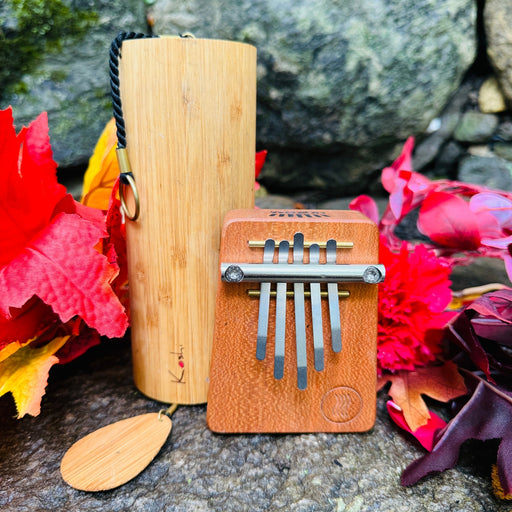
Koshi Chime Ignis | G-Major Ignis (G-Major) — ♪♫ G B D G B D G A — marked by a red dot. The Ignis tuning offers bright, radiant, and joyful tones t...
View full detailsKoshi Set: Aqua, Aria, Ignis & Terra | All 4 Elemental Tunings The Koshi chime is an authentic musical instrument — an original creation of hig...
View full detailsKoshi Chime Aqua | D-minor Aqua (D-minor) — ♪♫ A D F G A D F A — marked by a blue dot. The Aqua tuning carries a peaceful, flowing, and slightly m...
View full detailsKoshi Chime Aria — A-Minor The Aria (A-minor) is the airy, uplifting voice of the Koshi family — marked by a yellow dot. Its note sequence ♪ A C E ...
View full detailsZaphir Chime Red | G-Major For our Soundscape sets we color-matched our Zaphir chimes to the Intuitive Soundscapes color scheme, making it easy to ...
View full detailsColor-Coordinated Set of 4 Zaphir Chimes | Intuitive Soundscapes Collection This is a set of the 4 Zaphir chimes matching our Intuitive Soundscapes...
View full detailsZaphir Chime Blue | D-minor Zaphir Chimes are made in France and come in a variety of colors — we’ve chosen this royal blue for our D-minor chime. ...
View full detailsZaphir Chime Green | C-Major Zaphir Green is part of our C-Major Intuitive Soundscapes Collection. It matches any C-Major tuned instruments: Monoli...
View full detailsKoshi Chime Ignis | G-Major Ignis (G-Major) — ♪♫ G B D G B D G A — marked by a red dot. The Ignis tuning offers bright, radiant, and joyful tones t...
View full detailsTwinkle Duo: B5 Kalimba & Koshi Ignis | G-Major Pair the sparkling tones of the B5 Kalimba in G-Major with the calming resonance of the Koshi I...
View full detailsZaphir Chime Red | G-Major For our Soundscape sets we color-matched our Zaphir chimes to the Intuitive Soundscapes color scheme, making it easy to ...
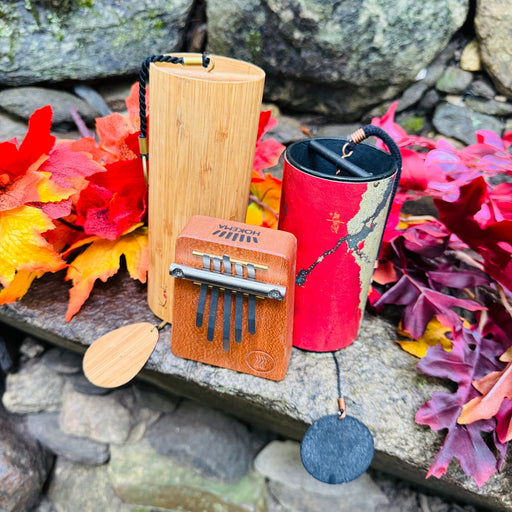
View full detailsTwinkle Trio: B5 Kalimba, Koshi Ignis & Zaphir Red | G-Major Enhance the twinkling sound experience by pairing the Koshi Ignis Chime with the Z...
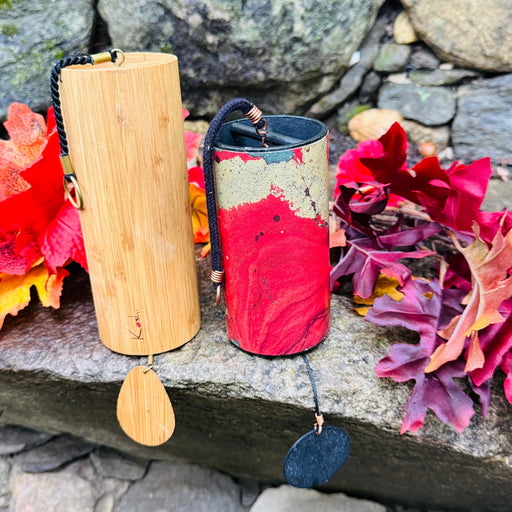
View full detailsA matched pair of shimmering G-major chimes — hold one in each hand and let their gently different tunings wash over you in stereo, filling the roo...
View full details
