
“Music is healing.” — Many people who read this sentence will surely nod in agreement. Even though music cannot do everything, sound has a tremendous influence on our mood, our subconscious, and our sensory experiences. It’s no surprise, then, that music therapy has become a central medical tool for easing many different conditions. This is confirmed, for example, by Dr Susann Kobus, Music Therapist.
As a young woman, she dedicated herself fully to music, completed her schooling at a specialized music high school, and studied piano with the intention of becoming a concert pianist in Dresden and Cologne. Early on, she began teaching piano and frequently worked with children and adolescents for whom this “encounter with music” was clearly beneficial. She also made music with people with physical disabilities, which led her to pursue Music Therapy studies at the University of Münster.
During this time, Susann was introduced to music therapy work with premature infants — a form of treatment she found deeply fascinating. The tiny signals the babies give as soon as a sound is played struck her as both moving and unique.
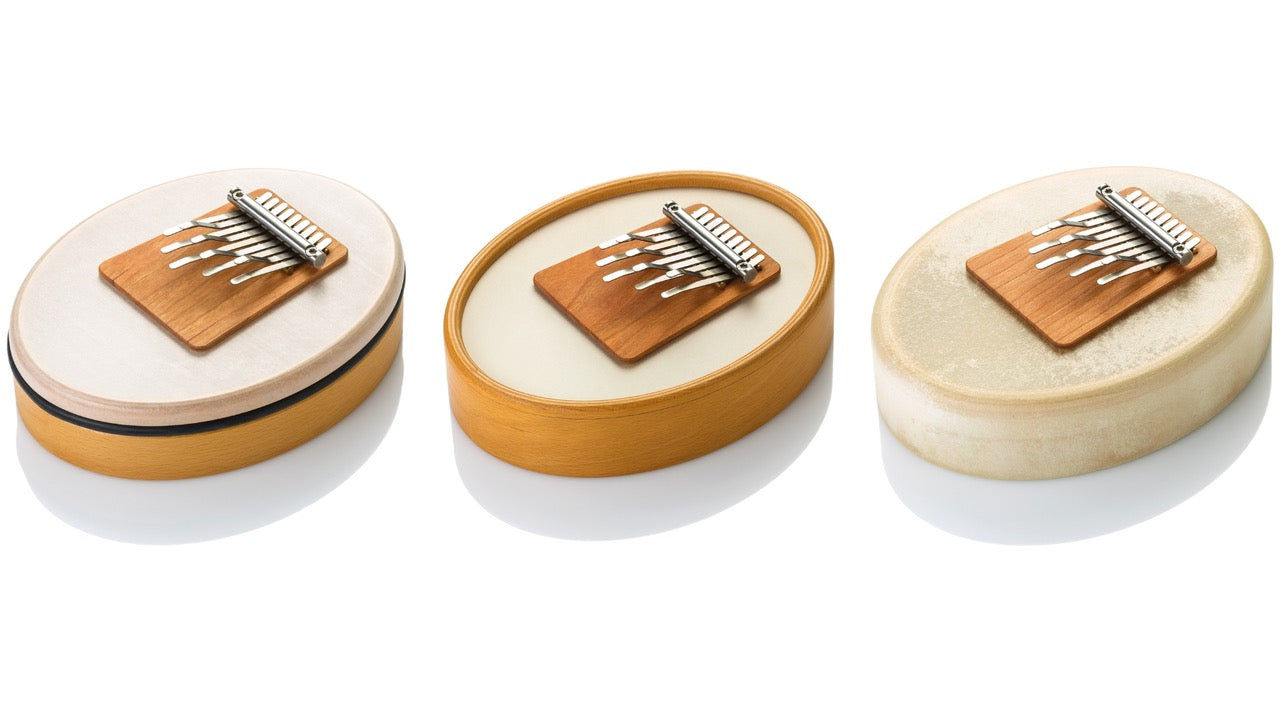
Ten years ago, Susann began working in the neonatal and pediatric units at the University Hospital in Essen. It was there that her research also began, research that shows music truly has healing effects. Among other instruments, Susann especially uses the Hokema Sansula for her treatments — not only because it is easy to hold, but also because its unique sound creates an atmosphere for the children that is difficult to put into words.

The Sansula is known for its enveloping tone and the pleasant vibration created by its resonant membrane. These sounds closely resemble the auditory experience within the “safe space” of the womb. At the University Hospital Essen, Susann’s work quickly gained attention. Enthusiastic parents of treated babies, as well as colleagues, approached her increasingly often requesting appointments. It soon became clear that the Sansula’s effect on premature infants in intensive care needed to be scientifically documented, because the impact was simply so remarkable.
This led, for example, to studies with extremely premature infants born before 32 weeks of gestation. From immediately after birth until discharge, the babies received live music-therapy sessions with the Sansula. The positive effects were immediately visible: there were significant improvements in vital parameters. Heart rate and respiratory rate decreased during music-therapy sessions, and oxygen saturation increased—even during sleep.
You can find the studies under here.
a. People say that hearing is the first sense to develop, is that correct? And how did people come up with the idea of using music therapy for premature infants?
Yes, that’s true. You can imagine that all sounds in the womb are perceived in a very muffled way, more like sound waves. The baby can hear the mother’s heartbeat and, in addition, a comforting whooshing, bowel sounds, and later also external tones. Because of the amniotic fluid, all sound is cushioned and first experienced as vibration.
The Sansula, thanks to its resonant membrane, produces a similar effect. The tones are accompanied by vibrations that can even be felt in the room. This memory of the safe, enclosed womb clearly has a positive effect on the babies: their heart rate and breathing visibly regulate while the instrument is played gently for them.
b. How did the Sansula become part of your work? How did you first discover it?
I have always used various instruments—kalimbas, the monochord, or an ocean drum—for music therapy in the neonatal and pediatric units. But many instruments are bulky or difficult to handle. When I discovered the Sansula and its beautiful sound, it became immediately clear that it was the perfect instrument for my work. It is easy to hold and works true wonders. Sitting beside a baby and playing it even feels more harmonious simply due to its size. And the sound effect is, as mentioned, unparalleled. I’ve now been using it in my work for ten years.
c. Would you say the Sansula is now the most widely used instrument in Music Therapy?
There are many colleagues and, of course, students who are very interested in my work and absolutely fascinated by the Sansula’s impact on our tiny patients. So yes, it is becoming widely used.
Unfortunately, music therapy is still not covered by the health insurance companies. We continue to rely on donations and outside funding, and we are grateful for support through the Essen University Medicine Foundation. But the more publicly we present our work, the more obvious it becomes that music therapy has incredible effects on patients — whether in women’s health, neurology, or neonatology. And ultimately, it also relieves the clinics when people can be safely discharged sooner or experience comforting, positive moments during their hospital stay.
The Sansula has certainly become one of the most important instruments in this field. Its ease of play — requiring no prior knowledge and having an immediate effect — is unique and, simply put, extremely practical. It is easy to transport and suitable for use anywhere. I even use it privately, for example with my own children.
d. Is it true that using the instrument while the baby sleeps creates an atmosphere similar to the womb?
As mentioned, the vibration created by the resonant membrane produces an atmosphere somewhat reminiscent of the womb. If we imagine the noise levels premature babies are exposed to in an intensive-care unit, we can easily understand how soothing a beautiful tone can be.
When I work with my students in the university hospital, they quickly notice how loud the equipment around the incubators and beds really is. The babies constantly hear the beeping and hissing of medical devices. We obviously cannot turn those off. But the Sansula adds something beautiful. The babies hear a pleasant tone paired with a gentle vibration that they can clearly perceive. Our study evaluations showed significant improvements in babies’ vital signs, and they fell asleep faster.
e. When using the instrument during pregnancy, what should parents be aware of? And can they continue using it after the hospital stay? What effect does it have on parent-child bonding?
There’s no doubt that the Sansula is a long-term investment for the whole family. Even during pregnancy, its sound can help the baby experience comforting tones and relax in the womb. However, one must avoid placing the instrument directly on the belly while playing. The vibration transfers very strongly through the amniotic fluid and can have the opposite — even negative — effect. Played at a distance, it is a wonderful way to offer the unborn baby something soothing.
Once the baby is born, it’s excellent for calming, regulating breath and heart rate, and creating moments of connection. But even for perfectly healthy children, the sound is delightful and helps them relax. I’ve often seen that children who are already older remain fascinated by it and even begin to play it themselves. Parents have sent me deeply touching photos of children playing the Sansula — children I once accompanied musically in the neonatal unit.
f. What is the most astonishing effect you have ever observed?
Once, I treated twins who were both born blind and deaf. They spent months in our unit, and I continued playing for them even though I doubted they could hear me at all. But we must not forget the vibrations the Sansula produces.
One day, while playing for one of the twins, I held the instrument slightly above the baby’s crib. Suddenly, the child, who had been completely motionless, moved the arm beneath the tone I had just played. Moments like these are profoundly moving and unforgettable. Just because some senses are not functional does not mean the whole person isn’t. I still don’t know what the child felt — but the reaction was unmistakable. Moments like this make all the hard work worthwhile.
“Even the smallest song can brighten vast darkness.” — Francis of Assisi