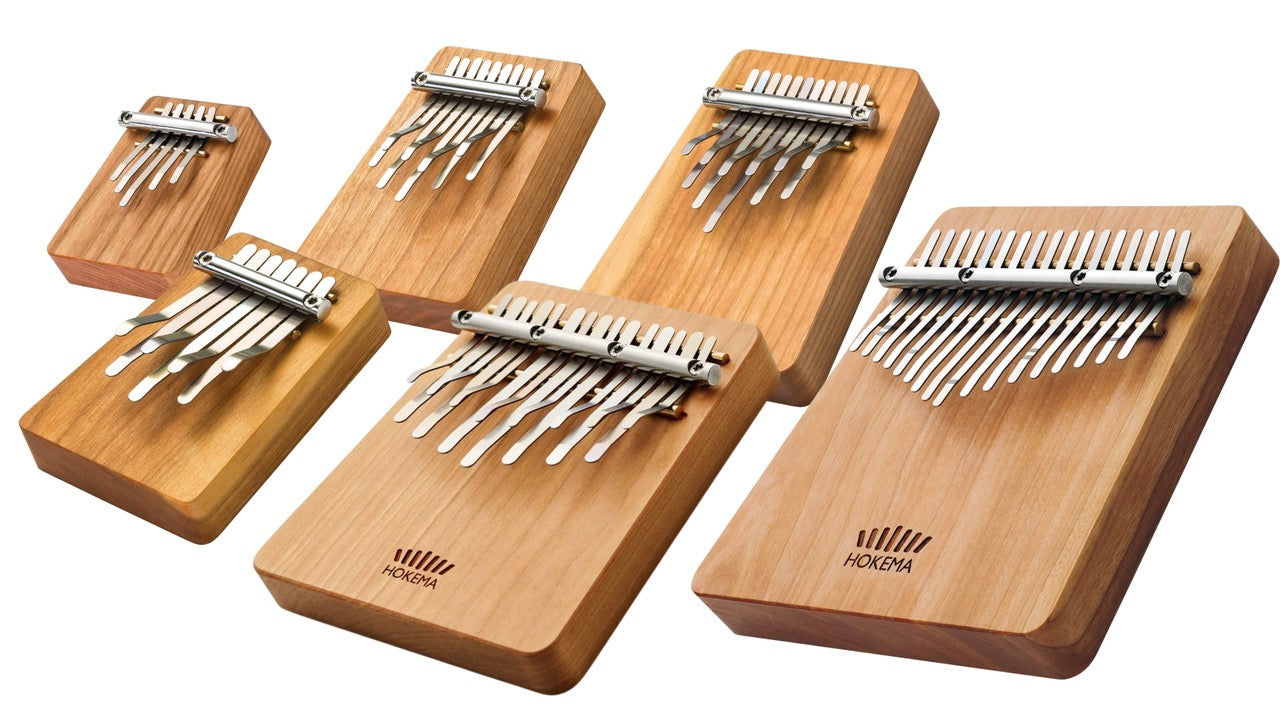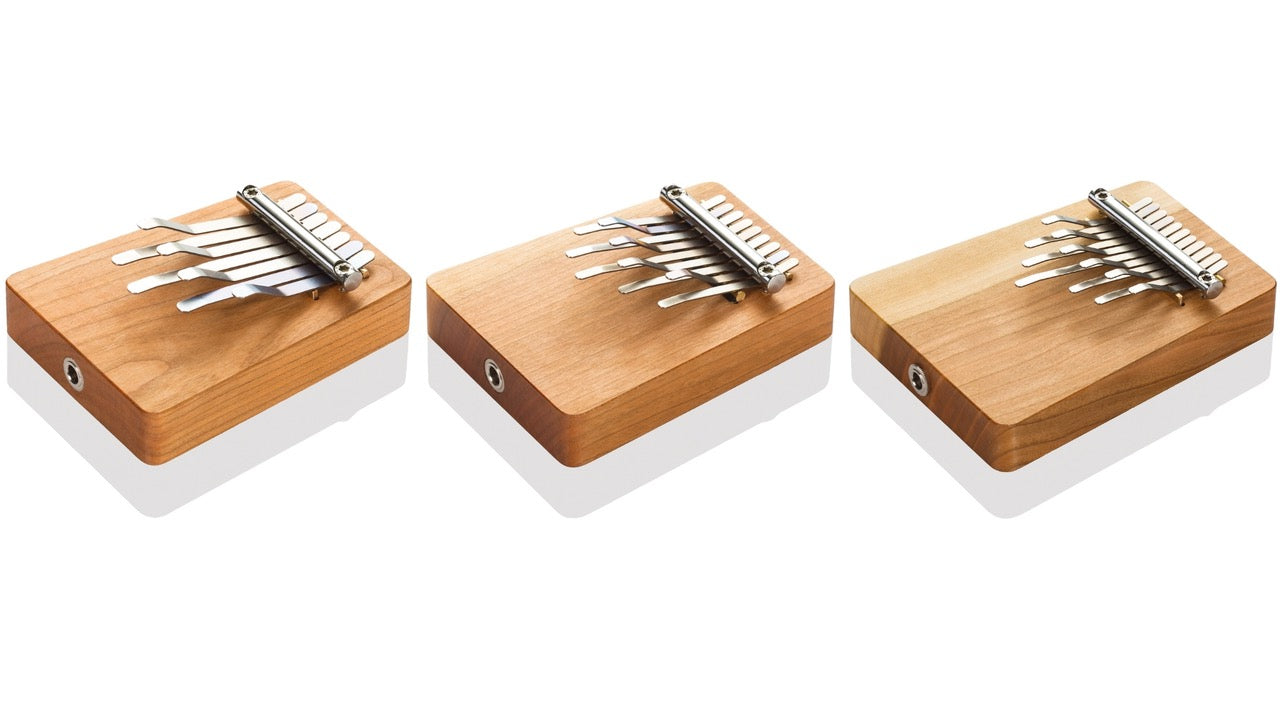


Watch this short video in which we compare and contrast three similar instruments we call the "Keyboard Kalimbas": the B15, B17, and B17-Mini by Hokema.
Watch and listen to this short video demonstration:
Though not an official Hokema category, we call these instruments "Keyboard Kalimbas" because they contain full diatonic musical scales — notes arranged in order going up the scale, much like the layout of a piano keyboard.
Diatonic scales contain 7 notes in a series of intervals including five whole steps and two half-steps — the familiar do-re-mi-fa-so-la-ti sequence. The 17-tine kalimbas cover this sequence 2.5 times; the 15-tine instrument repeats twice plus one extra note at the top.
Unlike a piano where notes climb left to right, on these kalimbas the lowest note sits at the bottom center, and the scale is played by alternating thumbs: right-left-right-left (or left-right for left-handers). This places triads — groups of 3 harmonious notes — right next to each other, making chords easy to play. The result: instruments designed for both melody and harmony, capable of accompanying songs or supporting original compositions.
For musicians, these are genuine musical instruments for playing repertoire, writing compositions, performing with other instrumentalists, or singing along. They do require a degree of musical knowledge and practice to play sequences fluently.
If you prefer playing freely without practice or worrying about "wrong notes," our Intuitive Soundscapes Collections may be a better fit. These are curated sets of instruments matched to each other with limited notes — so anything you play sounds harmonious. They're much easier to pick up intuitively, though they don't support the chord changes and melodic range of the keyboard kalimbas.